
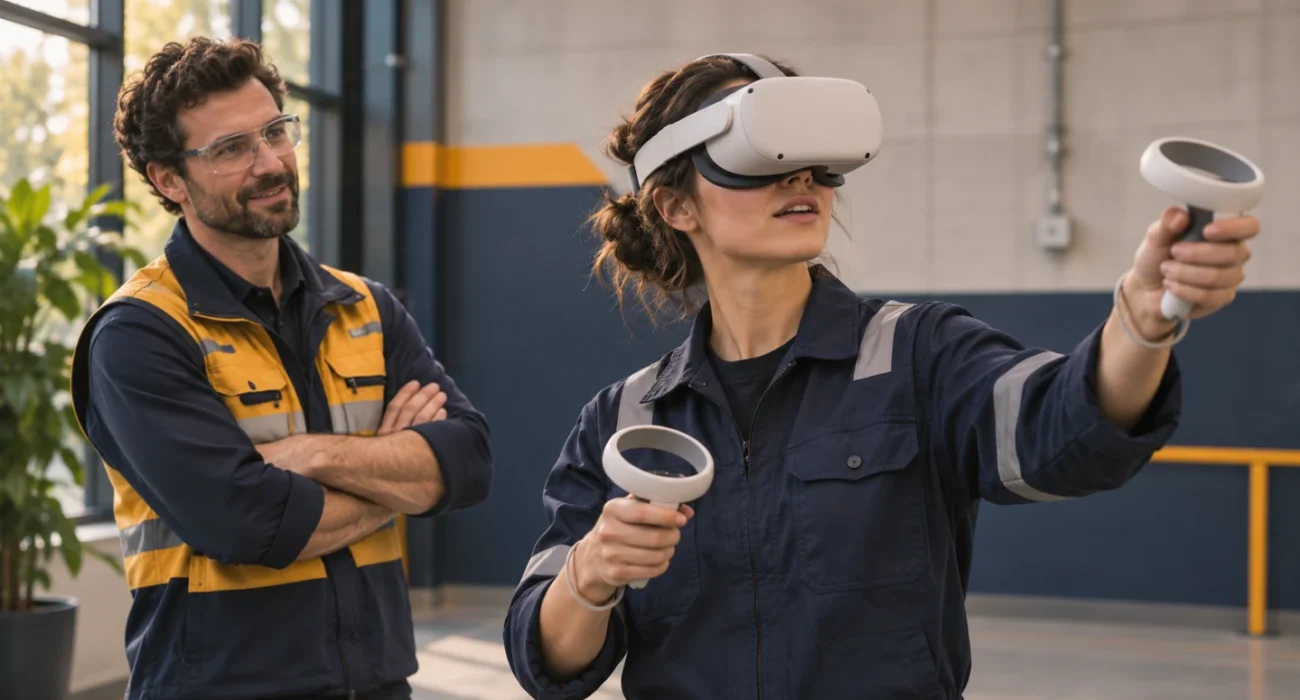
A useful virtual reality (VR) pilot gives your team one task to rehearse and an instructor a clear way to assess it. Instead of recreating an entire facility, start with a specific moment: a pre-start inspection in which an operator spots an abnormal condition and decides whether to proceed or report it. That gives you something measurable before you invest in more scenarios.
A 2026 railway safety field study compared six training formats, including VR and desktop simulation. The digital formats were associated with better performance on one safety-critical assessment item. The study was not designed to isolate technology as the cause. The practical lesson for a business pilot: decide which behavior to observe and how to measure it before choosing the format.
1. Choose the decision you want people to practice
Ask an instructor which mistake keeps recurring and what is hard to rehearse with the current approach. If learners mainly need to recall information, a web module may be enough. If they need to move through a space, locate unfamiliar items, or act in sequence while looking around, a headset may be worth testing.
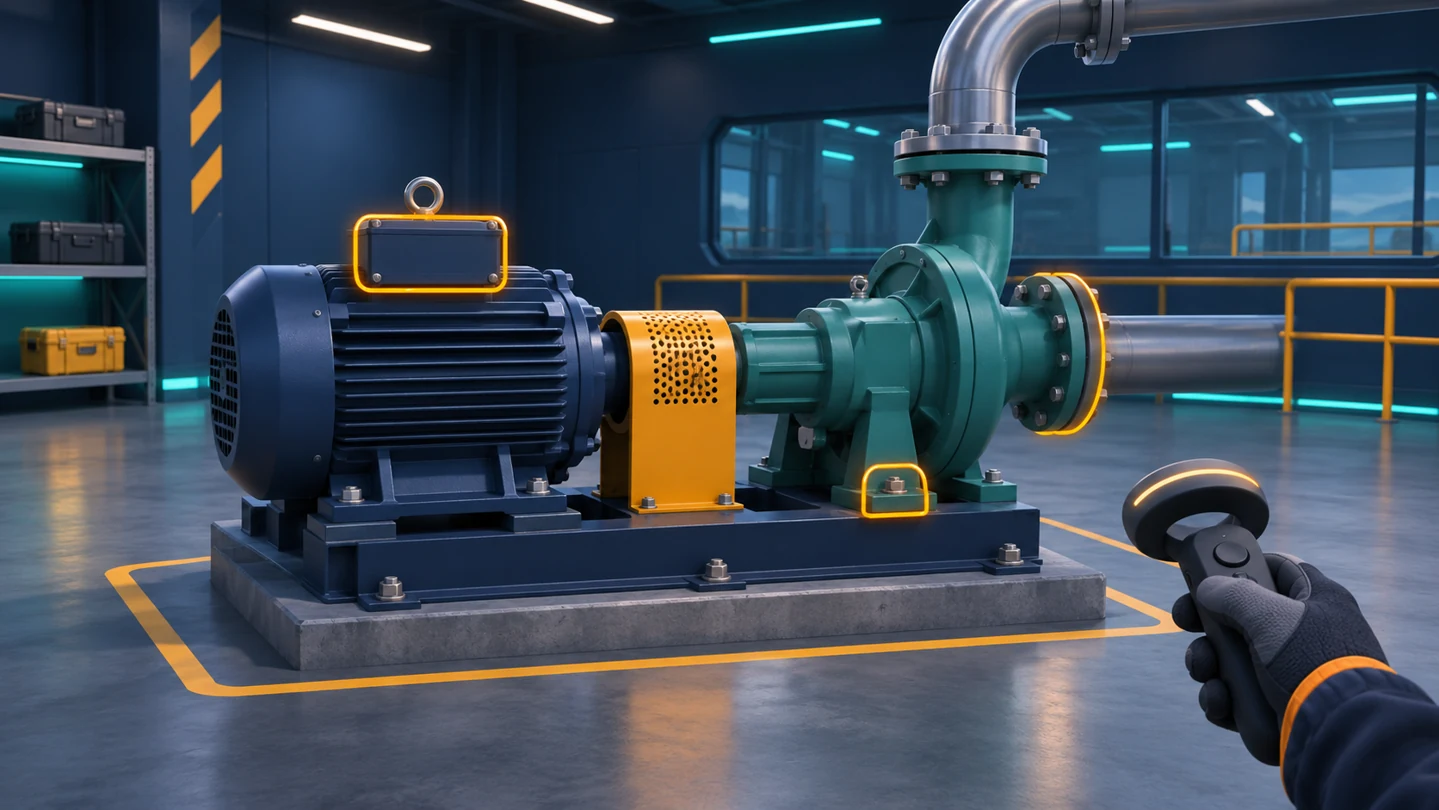
Hypothetical example: in a pre-start inspection, the learner approaches an inactive virtual machine. The instructor defines what to inspect and which conditions require stopping. The simulator records what the learner noticed and whether they escalated the issue, then explains the outcome in a debrief.
2. Scope the first build
When requesting a quote, share the target scenario, who will use it, and which devices are available. A small pilot could include one 3D environment, a guided practice run, an assessment mode without prompts, and a results summary. Agree upfront on what is out of scope, such as multiple facilities or learning management system integration, so estimates cover the same work.
Have the instructor and safety lead validate the scenario, expected actions, and feedback before production. Simulation can complement training and supervised practice. It does not replace practical verification or any required qualification.
3. Measure performance, not just satisfaction
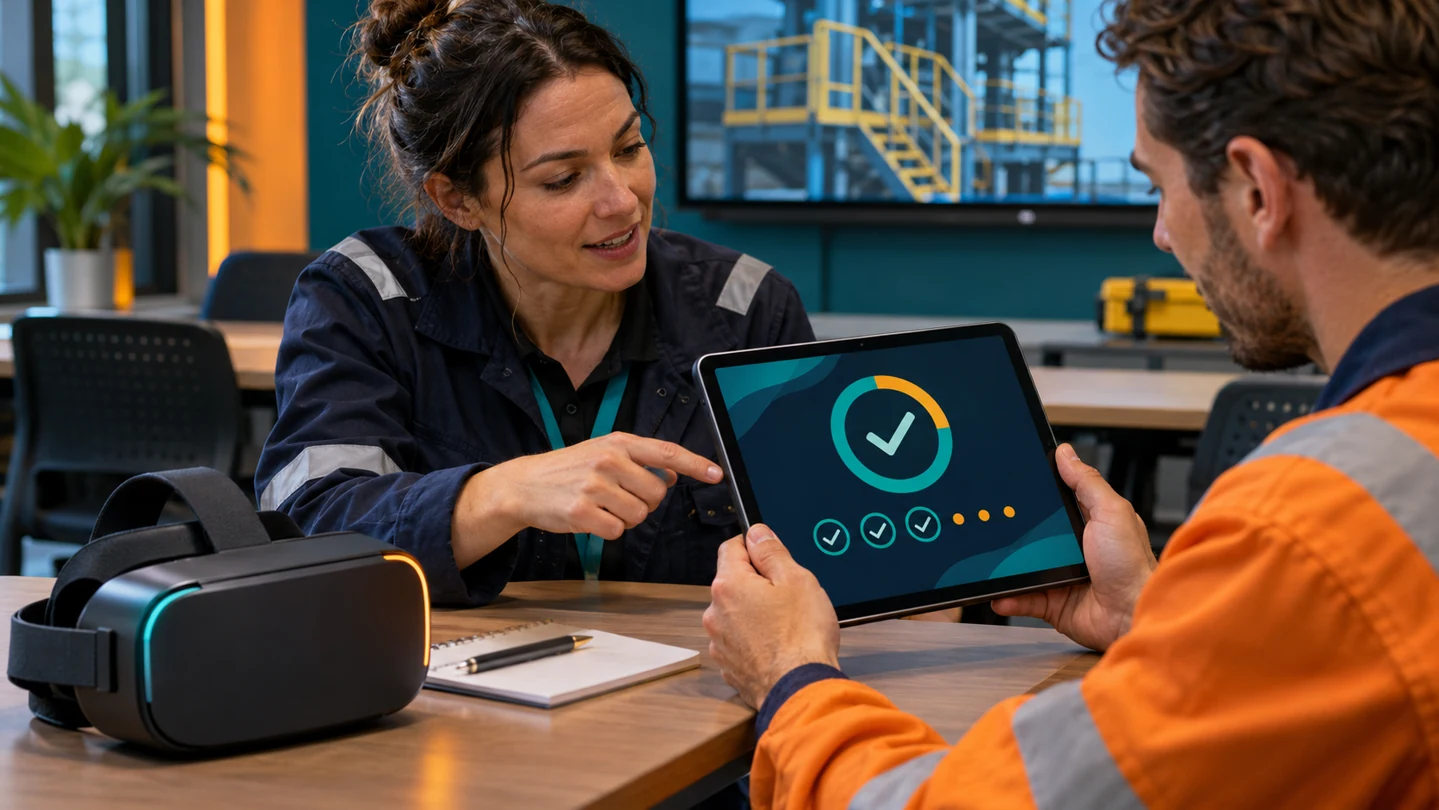
Where practical, compare your current training with the pilot using the same rubric. Measure critical steps and decisions first; treat speed as secondary. Also track what makes each session harder to repeat, such as headset setup, available space, discomfort, or the amount of assistance required.
| Question | What to record |
|---|---|
| Did the learner spot the anomaly? | Correct observations and missed cues. |
| Did they make the expected decision? | Final decision, skipped critical steps, and use of hints. |
| Can they apply it outside the simulator? | Performance in supervised practice, where safe and feasible. |
| Can we run it at scale? | Setup time, device availability, and instructor support. |
Agree on what would justify expanding the pilot before you launch it. If learners improve in VR but not during supervised practice, revisit the design before paying for more scenarios.
What do you need to request a quote?
Start with one procedure, the mistakes you want staff to practice handling, the people you need to train, and your available devices. Explore our enterprise training simulators and interactive enterprise solutions.
📩 Request a quote for your first VR training pilot from FRYOS Studios. Tell us what your team needs to practice and what you want to measure.
Message us on WhatsApp · info@fryosstudios.com · Visit our website