

Business Game Development Companies and Corporate Simulation Solutions
Business game development companies are transforming how organizations train employees, improve internal processes, and create engaging digital experiences for teams and customers.
Traditional presentations, passive learning systems, and repetitive corporate training methods are no longer effective in modern digital environments. Companies today need interactive experiences capable of increasing engagement, improving knowledge retention, and creating more dynamic learning processes.
For this reason, more organizations are investing in corporate video games, business simulators, and gamified platforms designed specifically for enterprise environments.
Many companies are also integrating technologies such as virtual reality for companies to create immersive training systems and advanced interactive simulations.
At Fryos Studios, we develop enterprise games, interactive business software, and gamified experiences using Unity, Unreal Engine, and advanced 3D technologies to help organizations modernize traditional business processes through interactive digital solutions.
What are business games?
Business games are digital experiences built with video game mechanics such as challenges, rewards, simulations, progression systems, and interactive decision-making, but focused on corporate objectives instead of entertainment.
Unlike traditional consumer video games, these solutions are designed to improve processes such as:
- Employee training.
- Corporate onboarding.
- Skill assessment.
- Organizational culture.
- Interactive learning.
- Customer engagement.
- Product education.
- Knowledge retention.
Many companies also combine these systems with interactive 3D experiences to create more immersive and engaging environments.
When does a company need a business game?

Not every organization requires gamification, but there are situations where interactive business experiences create significant competitive advantages.
Low training engagement
Traditional corporate training often generates low participation and poor information retention.
Slow onboarding processes
New employees may take too long to understand workflows, internal systems, and company culture.
Complex technical training
Many industries require safe, interactive environments to train employees without risking expensive equipment or operational safety.
Weak brand activations
Traditional marketing campaigns increasingly struggle to capture attention in highly competitive digital environments.
Need for analytics and performance tracking
Business games allow organizations to collect real-time data related to user behavior, decision-making, and performance.
Types of business games and gamified solutions
Corporate gamification can be implemented across multiple business areas and organizational objectives.
Corporate simulators
Business simulators recreate operational processes and technical training scenarios inside safe and interactive digital environments.
Many organizations combine these projects with virtual reality solutions for companies to create even more immersive experiences.
Gamified learning platforms
Gamification systems use rewards, rankings, progression systems, and challenges to increase employee participation and motivation.
Advergames and interactive marketing
More brands are using advergames to improve engagement and brand recall during digital campaigns and corporate events.
Team building business games
Multiplayer interactive experiences help strengthen collaboration, communication, and organizational culture.
Benefits of implementing business games
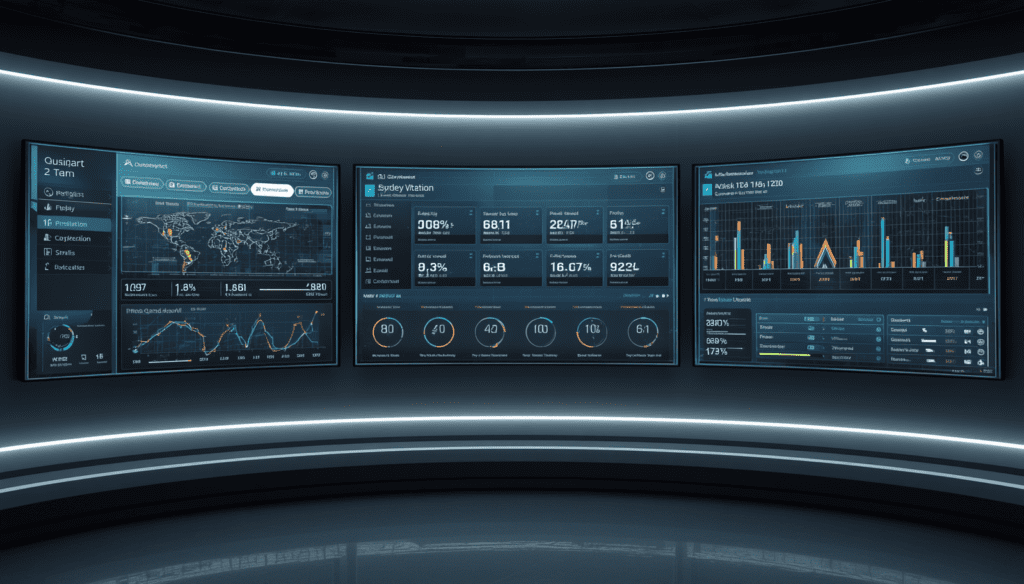
Gamified platforms provide measurable competitive advantages for organizations looking to modernize internal processes and improve engagement.
Main benefits of corporate gamification
- Higher knowledge retention.
- Increased engagement.
- More active participation.
- Interactive learning systems.
- Real-time analytics.
- Reduced operational costs.
- Scalable digital experiences.
- Better performance evaluation.
Corporate video games transform repetitive business processes into dynamic, memorable, and measurable experiences.
Traditional training vs gamified training
| Traditional Training | Gamified Training |
|---|---|
| Passive theory-based learning | Interactive experience-based learning |
| Low employee participation | High engagement and active participation |
| Information is easily forgotten | Higher knowledge retention |
| Limited evaluations | Real-time analytics and metrics |
| Repetitive and static processes | Immersive and motivating experiences |
| Same training for everyone | Personalized and adaptive experiences |
| Difficult to measure performance | Detailed tracking of skills and progress |
| Lower user motivation | Reward systems and progression mechanics |
| Dependence on physical sessions | Scalable digital access |
| Higher long-term operational costs | Process optimization and automation |
How to choose a business game development company
Before hiring a business game development company, organizations should evaluate several factors related to technical capabilities, business objectives, and interactive development experience.
Important aspects include:
- Experience developing enterprise games.
- Corporate simulator development.
- Gamification expertise.
- Interactive UX design.
- Analytics integration.
- Cross-platform compatibility.
- Corporate training experience.
Many businesses are looking for development partners that not only create interactive software, but also understand business goals related to engagement, training, and digital transformation.
Why are companies investing in gamification?
Corporate gamification continues to grow because companies need more effective ways to capture attention, increase participation, and improve learning outcomes.
Traditional formats generate lower engagement every year. Interactive experiences encourage users to participate, solve problems, and retain information more effectively.
For this reason, business games are now being used for:
- Corporate training.
- Employee onboarding.
- Skill evaluation.
- Brand activations.
- Corporate events.
- Technical training.
- Customer loyalty.
- Product and service education.
Many organizations also combine these strategies with interactive 3D experiences, advergames, virtual reality solutions for companies to create more immersive digital ecosystems.
Frequently asked questions about business games
A business game is an interactive digital experience designed to achieve corporate objectives using game mechanics such as simulations, rewards, and challenges.
Pricing depends on graphic complexity, interaction systems, multiplayer functionality, and platform requirements.
An average enterprise gamification project may take between 2 and 6 months depending on technical scope and production requirements.
Yes. Many platforms developed in Unity are compatible with Android, iOS, PC, and web browsers.
No. Modern gamification solutions are scalable and can be adapted for medium-sized businesses and growing organizations.
Fryos Studios: Business Game Development Company in Colombia
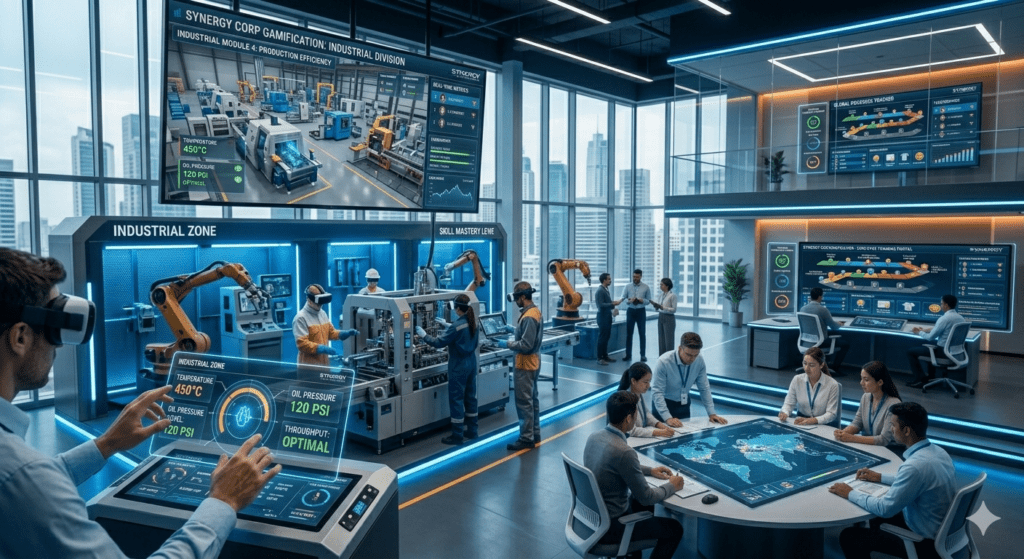
At Fryos Studios, we help organizations transform training systems, internal processes, and brand experiences through custom interactive solutions.
We develop corporate simulators, serious games, gamified platforms, and interactive business experiences focused on improving engagement, increasing participation, and optimizing learning processes.
Our team builds enterprise software using Unity, Unreal Engine, and advanced technologies to create scalable digital experiences aligned with real business objectives.
In addition to enterprise games, we also develop virtual reality solutions for companies, advergames, and interactive 3D experiences for organizations across Colombia and Latin America.
📩 Interested in developing a business game or gamified platform for your company?
📩 Contact us today:
Email: info@fryosstudios.com
🌐 Fryos Studios Official Website