
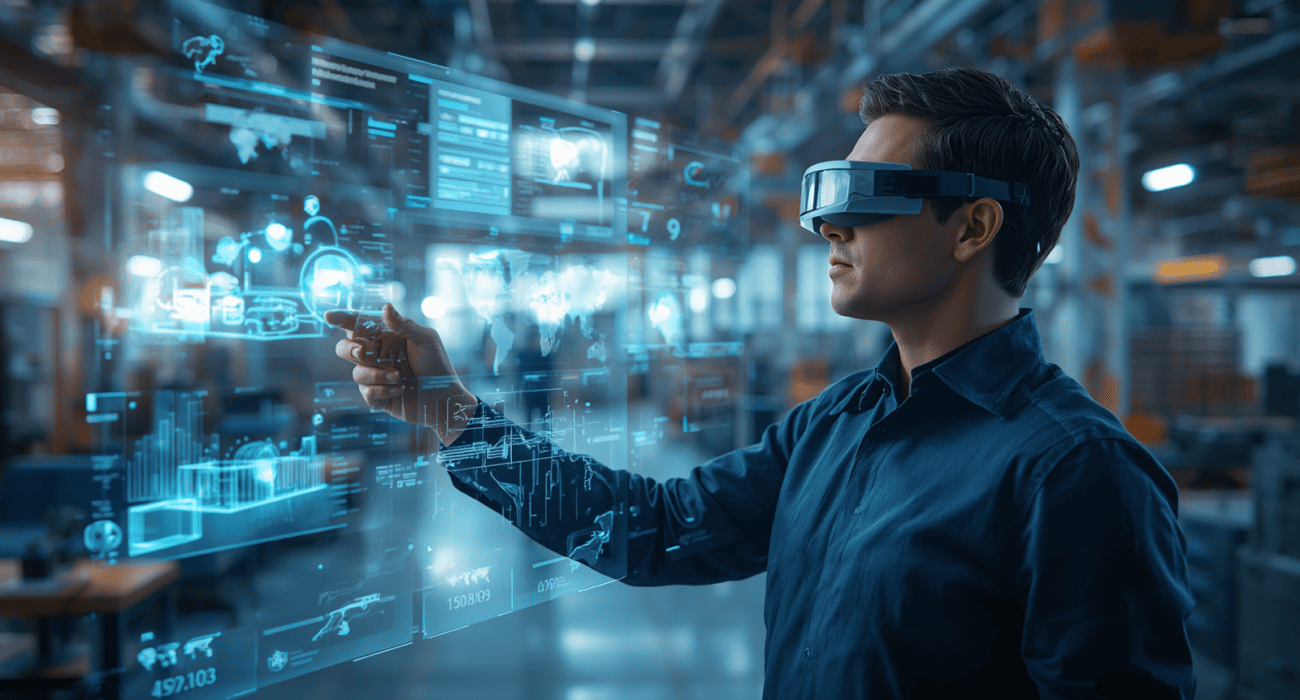
Augmented Reality for Business: Benefits, Applications, and Use Cases
Augmented reality for business is transforming the way organizations train employees, showcase products, optimize industrial processes, and create more engaging digital experiences for customers and teams. By blending the physical world with interactive digital content, this technology enables businesses to visualize information in real time, improve decision-making, and deliver highly immersive experiences.
While many people still associate augmented reality with gaming or mobile entertainment, its applications now extend to industries such as manufacturing, healthcare, architecture, retail, education, and marketing. More companies are integrating augmented reality into their digital transformation strategies to streamline operations, reduce costs, and gain a competitive advantage through innovation.
In this article, you’ll learn what augmented reality for business is, how it works, its key benefits, and why it has become one of the most valuable technologies for developing interactive experiences, training simulators, industrial applications, and enterprise innovation projects.
What Is Augmented Reality for Business?
Understanding augmented reality for business means understanding how organizations can enhance the physical world with digital information to improve workflows, communication, and user experiences.
Augmented reality (AR) is a technology that overlays digital elements—such as 3D models, images, animations, step-by-step instructions, or real-time data—onto the physical environment using devices like smartphones, tablets, smart glasses, or specialized displays. Unlike other immersive technologies, AR allows users to continue seeing their real surroundings while interacting naturally with digital content.
Today, businesses across multiple industries use augmented reality to train employees, assist maintenance operations, visualize products before manufacturing, create interactive marketing campaigns, and develop digital experiences that improve both productivity and customer engagement.
Its ability to seamlessly combine physical and digital information has made augmented reality a strategic technology for organizations seeking to innovate, reduce operational errors, and accelerate their digital transformation initiatives.
What Can Businesses Build with Augmented Reality?
The possibilities of augmented reality for business continue to expand thanks to technologies such as Unity, Unreal Engine, ARKit, and ARCore. Organizations can now develop customized solutions for virtually every industry.
Some of the most common applications include:
- Training simulators that allow employees to learn through interactive, hands-on experiences.
- Remote assistance applications that display digital instructions during maintenance and repair tasks.
- 3D product configurators and visualizers that let customers explore products before purchasing or manufacturing them.
- Immersive experiences for trade shows, corporate events, and product launches.
- Interactive marketing campaigns where users unlock digital content directly from their smartphones.
- Industrial, logistics, and manufacturing solutions that provide contextual information in real time to improve operational efficiency.
Many of these solutions can also be combined with virtual reality for business, training simulators, and digital twins, creating comprehensive digital ecosystems that support business growth and innovation.
How Is Augmented Reality Different from Virtual Reality?
Although augmented reality and virtual reality are both immersive technologies, they serve different purposes and offer distinct user experiences.
Augmented reality enhances the real world by overlaying digital content onto the user’s physical surroundings, while virtual reality completely replaces the real environment with a fully digital experience accessed through a VR headset.
This distinction makes augmented reality especially valuable for tasks that require users to remain aware of their physical environment, such as industrial maintenance, operational training, remote assistance, logistics, and product visualization. Virtual reality, on the other hand, is ideal for fully immersive simulations, advanced training programs, and virtual tours.
In many enterprise projects, both technologies complement each other to deliver more comprehensive and effective digital solutions.
How Does Augmented Reality for Business Work?
Once you understand what augmented reality for business is, it becomes easier to see why this technology can be integrated into such a wide range of business processes.
AR works by combining the physical environment with digital content generated in real time. Using cameras, sensors, and spatial recognition algorithms, the system detects surfaces, objects, or markers and accurately positions 3D models, animations, and interactive information within the user’s surroundings.
As a result, users can interact with digital content that appears naturally integrated into the real world while receiving contextual information without leaving their current environment.
Mobile Devices
Smartphones and tablets remain the most accessible way to deploy augmented reality for business solutions.
Using only a device’s camera, users can visualize products at full scale, access interactive manuals, explore 3D models, or participate in immersive marketing experiences without requiring specialized hardware.
Smart Glasses
AR smart glasses project digital information directly into the user’s field of view, allowing hands-free interaction with virtual content.
In industries such as manufacturing, logistics, healthcare, and field services, these devices help employees perform inspections, maintenance, assembly, and training tasks by displaying real-time instructions while keeping both hands available for work.
Benefits of Augmented Reality for Business
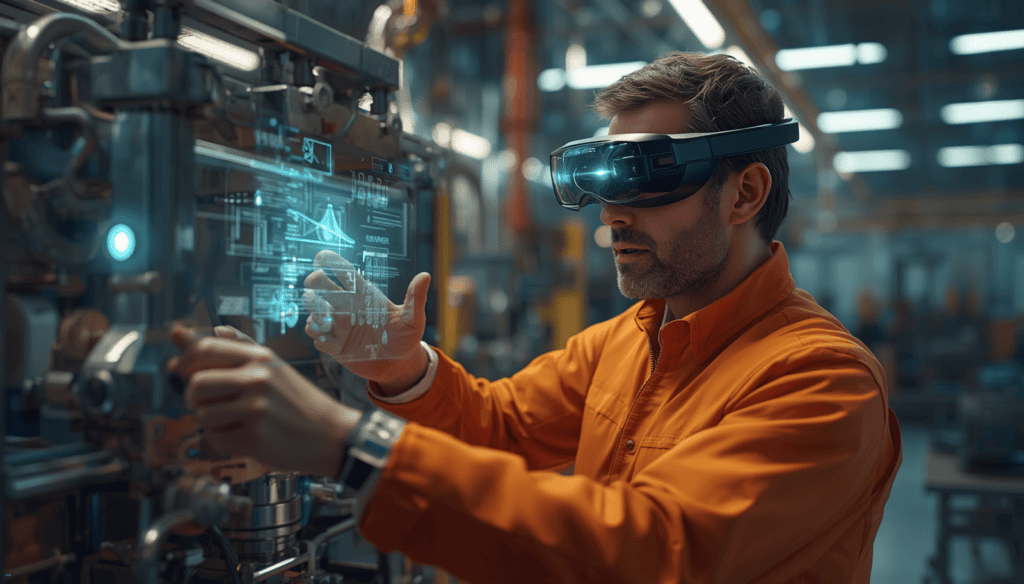
After understanding what augmented reality for business is, it’s easy to see why more organizations are integrating it into their innovation strategies. Beyond overlaying digital content onto the physical world, this technology helps businesses streamline operations, improve employee training, strengthen marketing efforts, and create more engaging experiences for both customers and employees.
Thanks to its flexibility, augmented reality can be implemented across organizations of all sizes and industries, from sales and marketing applications to industrial solutions for maintenance, logistics, and field service operations.
Improve Employee Training
One of the biggest advantages of augmented reality for business is its ability to transform how employees learn and develop new skills.
Instead of relying solely on manuals or classroom-based training, employees can view digital instructions, interactive 3D models, and step-by-step guidance directly on the equipment or workspace where they perform their tasks. This hands-on approach improves knowledge retention, accelerates learning, and significantly reduces operational errors.
In many cases, these solutions are combined with business training simulators to create even more immersive and effective learning experiences.
Optimize Industrial Operations
Augmented reality has also become a valuable tool for improving efficiency across manufacturing facilities, warehouses, and maintenance operations.
Technicians can access real-time information, identify components, follow digital repair instructions, and receive remote assistance without interrupting their workflow. This reduces downtime, minimizes operational errors, and increases productivity in critical processes.
When combined with digital twins, organizations gain a more accurate view of their operations and can make faster, data-driven decisions.
Enhance the Customer Experience
More companies are using augmented reality to create richer and more engaging customer experiences.
Customers can visualize products at full scale, customize configurations, explore spaces, or interact with 3D models before making a purchase. This reduces uncertainty during the buying process while increasing customer confidence and satisfaction.
Industries such as retail, real estate, architecture, and automotive already rely on augmented reality to deliver product demonstrations that are far more compelling than traditional catalogs or static images.
Strengthen Marketing Strategies
Augmented reality enables brands to create highly interactive marketing campaigns where users actively engage with digital content instead of simply viewing advertisements.
Businesses can develop interactive filters, mobile AR experiences, event activations, and promotional campaigns that blend the physical and digital worlds, increasing brand awareness and customer engagement.
These experiences can also be integrated with advergames, creating immersive marketing strategies that encourage longer interaction and stronger brand recall.
Reduce Long Term Costs
Although implementing an augmented reality solution requires an initial investment, its long-term benefits often outweigh the upfront cost.
AR applications can be reused for employee training, technical support, sales presentations, product demonstrations, and corporate events, helping organizations reduce operational expenses while maximizing return on investment.
By minimizing errors, improving productivity, and making information more accessible, augmented reality contributes directly to greater operational efficiency across the organization.
Use Cases of Augmented Reality for Business
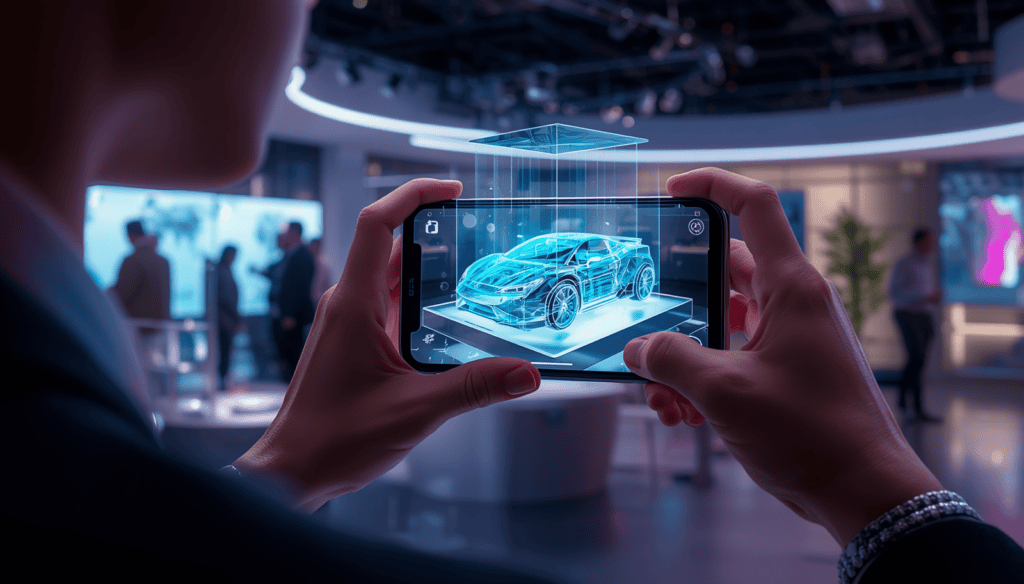
The versatility of augmented reality for business has enabled organizations across multiple industries to develop solutions tailored to specific business challenges. From employee training to interactive marketing campaigns, AR offers practical applications that deliver measurable business value.
Employee Training
Many organizations use augmented reality to train employees through hands-on experiences that allow them to learn directly within their work environment.
Employees can view operating procedures, safety protocols, and step-by-step instructions while performing their daily tasks, reducing training time and improving execution accuracy.
These solutions are often combined with business simulators to create more comprehensive and engaging training programs.
Manufacturing and Industrial Operations
In manufacturing environments, augmented reality simplifies maintenance, inspections, and assembly processes by displaying contextual information directly on machinery and equipment.
Operators can identify components, follow guided instructions, and resolve issues more efficiently, increasing productivity while minimizing downtime.
Marketing and Brand Activations
More brands are creating campaigns that allow users to interact with digital content using only their smartphones or tablets.
These experiences include product launches, interactive packaging, corporate event activations, and promotional campaigns that increase customer engagement while creating memorable brand experiences.
Sales and Product Visualization
Augmented reality enables customers to view products at full scale before making a purchase.
This technology is especially valuable in industries such as furniture, architecture, automotive, and manufacturing, where understanding a product’s size, appearance, and features plays an important role in the buying decision.
Trade Shows and Corporate Events
Businesses also use augmented reality to enhance visitor experiences at trade shows, conferences, and corporate events.
Through smartphones, tablets, or interactive displays, attendees can access additional information, explore 3D models, discover products, and participate in immersive digital experiences that strengthen brand positioning.
These solutions can also be combined with virtual reality experiences for business, creating even more impactful technology-driven activations.
Augmented Reality vs. Virtual Reality: Which Is Better for Business?
After understanding how augmented reality for business works, many organizations also ask how it compares to virtual reality and which technology is better suited to their projects.
Although both are immersive technologies, they serve different purposes. Augmented reality enhances the physical environment by adding digital content, while virtual reality places users inside a fully computer-generated environment.
The right choice depends on your business objectives, the type of experience you want to create, and how users are expected to interact with the solution.
When Should Businesses Use Augmented Reality?
Augmented reality is the ideal choice when users need to remain aware of their physical surroundings while receiving digital information.
For this reason, it is widely used for industrial maintenance, field service, logistics, inspections, operational training, sales, and product demonstrations. It is also highly effective for marketing campaigns where customers interact with digital content using only a smartphone or tablet.
When Should Businesses Use Virtual Reality?
Virtual reality is better suited for situations where the goal is to create a fully immersive environment in which users can train, explore, or experience simulated scenarios without the limitations of the physical world.
Businesses primarily use VR to develop training simulators, virtual tours, high-risk safety training, product demonstrations, and immersive experiences for trade shows and corporate events.
Augmented Reality vs. Virtual Reality Comparison
| Feature | Augmented Reality | Virtual Reality |
|---|---|---|
| Level of immersion | Medium | High |
| Interaction with the real world | Yes | No |
| Devices | Smartphones, tablets, and AR smart glasses | Virtual reality headsets |
| Primary applications | Marketing, maintenance, sales, and training | Simulations, training, and immersive experiences |
| Initial investment | Low to medium | Medium to high |
| Best for | Businesses that want to enhance the real world | Businesses requiring fully immersive simulations |
Which Industries Use Augmented Reality for Business?
Augmented reality for business is no longer limited to large corporations. Today, organizations across a wide range of industries use AR to improve internal operations, enhance customer communication, and create innovative digital experiences.
Its ability to merge digital information with the physical world makes it a powerful solution for businesses in virtually every sector.
Manufacturing and Industrial Operations
Manufacturing companies use augmented reality to optimize maintenance, inspections, assembly processes, and technical training.
Workers can access real-time digital instructions, visualize internal machine components, and reduce errors during critical operations, improving productivity and workplace safety.
Healthcare
Hospitals, healthcare providers, and medical training institutions use augmented reality to educate professionals, visualize surgical procedures, and enhance learning through interactive 3D anatomical models.
These applications improve both clinical training and patient education while increasing the accuracy of complex procedures.
Architecture and Engineering
Architecture firms and engineering companies use augmented reality to present projects before construction begins, allowing stakeholders to explore buildings, validate designs, and review proposals through highly interactive visual experiences.
These solutions can also be integrated with digital twins to improve project planning, monitoring, and decision-making throughout the construction lifecycle.
Retail and Commerce
Retail businesses increasingly develop augmented reality applications that allow customers to visualize products directly in their homes before making a purchase.
This technology improves the shopping experience, reduces product returns, and helps customers make more confident purchasing decisions.
Marketing and Events
Brands use augmented reality to create interactive advertising campaigns, corporate event activations, and digital experiences that capture audience attention and increase engagement.
These initiatives are often combined with advergames and virtual reality experiences for business to deliver memorable marketing campaigns that stand out from traditional advertising.
Technologies Used to Develop Augmented Reality for Business
The success of an augmented reality for business project depends not only on its design but also on the technologies used throughout development.
Today, businesses have access to a wide range of platforms that enable the creation of solutions for everything from mobile applications to industrial systems, employee training, and immersive event experiences.
Unreal Engine
Unreal Engine is one of the most advanced platforms for developing augmented reality applications with photorealistic graphics, exceptional performance, and highly interactive experiences.
Its rendering capabilities make it an excellent choice for enterprise projects that require outstanding visual quality and realistic simulations.
Unity
Unity is one of the world’s most popular development engines for augmented reality thanks to its flexibility and cross-platform compatibility.
It enables developers to build AR experiences for smartphones, smart glasses, tablets, and other connected devices across multiple industries.
ARKit and ARCore
ARKit (Apple) and ARCore (Google) provide the core technologies required to build augmented reality applications for iOS and Android devices.
These frameworks allow applications to detect surfaces, recognize objects, and accurately position digital content within real-world environments.
WebAR
WebAR removes the need to download or install an application by allowing users to access augmented reality experiences directly through a web browser using a link or QR code.
Because of its accessibility, WebAR is becoming increasingly popular for marketing campaigns, product launches, retail experiences, and corporate events.
Trends in Augmented Reality for Business
The evolution of augmented reality for business continues to accelerate as new technologies expand its capabilities across enterprise environments.
Every year, more advanced tools make it possible to develop smarter, more accessible, and increasingly immersive digital experiences.
Artificial Intelligence
The integration of artificial intelligence will enable smarter virtual assistants, automated object recognition, predictive analytics, and highly personalized AR experiences based on user behavior.
Extended Reality (XR)
The convergence of augmented reality, virtual reality, and mixed reality will continue driving the development of more comprehensive enterprise solutions.
More organizations are adopting XR technologies to improve employee training, optimize industrial operations, and create richer experiences for both customers and employees.
Smarter Digital Twins
The integration of augmented reality with IoT sensors and digital twins will allow businesses to monitor operations in real time while visualizing critical information directly on physical assets.
This capability will significantly improve decision-making and operational efficiency in industries such as manufacturing, energy, logistics, and infrastructure.
Growing Business Adoption
As AR hardware becomes more affordable and development platforms continue to evolve, augmented reality for business will become increasingly accessible across industries.
Organizations of all sizes are expected to adopt this technology to streamline operations, strengthen customer engagement, accelerate digital transformation, and deliver innovative experiences that create a lasting competitive advantage.
How to Choose an Augmented Reality Development Company
Implementing an augmented reality for business solution involves much more than building an attractive application. The success of the project depends on understanding your business goals, selecting the right technology, and designing an experience that delivers real value to users.
For this reason, choosing a technology partner with proven experience in enterprise solutions is just as important as selecting the technology itself.
Enterprise Project Experience
Not every company that develops augmented reality applications has experience delivering enterprise solutions.
It’s important to work with a team that has successfully built projects involving employee training, industrial operations, interactive marketing, business simulators, and immersive experiences. These types of projects require a deep understanding of business processes, operational challenges, and user needs.
Expertise in Complementary Technologies
Modern augmented reality solutions rarely rely on a single technology.
An experienced development partner should also have expertise in technologies such as Unreal Engine, Unity, artificial intelligence, virtual reality, 3D modeling, WebAR, ARKit, ARCore, and enterprise system integrations.
Combining these technologies enables the development of scalable, future-ready solutions that can evolve alongside your business.
Agile Development Methodologies
Agile development methodologies improve collaboration between clients and development teams by enabling continuous feedback and regular project validation throughout the development process.
This approach makes it easier to incorporate new requirements as business needs evolve, reducing risks while accelerating project delivery.
Scalability
A well-designed augmented reality solution should grow alongside your business.
For this reason, applications should be built with scalability in mind, making it possible to add new features, devices, and integrations without rebuilding the entire solution from scratch.
Why Choose Fryos Studios for Augmented Reality Development?
At Fryos Studios, we help businesses transform ideas into innovative digital experiences using technologies such as augmented reality, virtual reality, Unreal Engine, Unity, and artificial intelligence.
Our team develops custom solutions tailored to each organization’s goals, combining creativity, design, and technology to build applications that deliver measurable business results.
We develop projects including business simulators, training simulators, advergames, virtual reality experiences, augmented reality applications, 3D configurators, and immersive experiences designed to optimize operations, strengthen marketing strategies, and accelerate digital transformation.
Our goal is not only to build high-quality technology but also to create scalable solutions that help organizations innovate, improve productivity, and gain a competitive advantage.
Frequently Asked Questions About Augmented Reality for Business
Augmented reality for business is a technology that combines the physical environment with interactive digital content to improve employee training, sales, marketing, maintenance, logistics, and customer service.
Some of the biggest benefits include improved operational efficiency, enhanced employee training, increased productivity, lower operating costs, and more engaging experiences for both customers and employees.
Today, industries such as manufacturing, healthcare, architecture, engineering, retail, education, logistics, and marketing use augmented reality solutions to optimize processes and create innovative digital experiences.
Augmented reality overlays digital information onto the physical world, while virtual reality places users inside a fully digital environment through a VR headset.
Both technologies can work together to create comprehensive enterprise solutions depending on business objectives.
Augmented reality applications can run on smartphones, tablets, smart glasses, and other specialized wearable devices, depending on the project’s goals and the desired user experience.
Yes. Fryos Studios develops custom augmented reality for business solutions using technologies such as Unreal Engine, Unity, ARKit, ARCore, and WebAR to create immersive, interactive experiences tailored to each client’s needs.
Conclusion
Augmented reality for business has become one of the most valuable technologies driving innovation and digital transformation across industries. By seamlessly combining the physical world with digital information, organizations can optimize operations, improve employee training, strengthen marketing strategies, and create more engaging experiences for customers and teams.
As technologies such as artificial intelligence, digital twins, and extended reality continue to evolve, augmented reality will play an increasingly important role in how businesses train employees, sell products, improve operations, and communicate with customers.
Investing in augmented reality is no longer just about adopting new technology—it’s about creating a competitive advantage through innovation, efficiency, and exceptional digital experiences.
Looking to Develop an Augmented Reality Project for Your Business?
At Fryos Studios, we help businesses and organizations develop augmented reality for business solutions, training simulators, immersive experiences, interactive applications, 3D configurators, and custom software powered by Unreal Engine, Unity, and WebAR.
Whether you’re looking to improve employee training, optimize industrial processes, enhance customer engagement, or create innovative digital experiences, our team is ready to help bring your vision to life.