
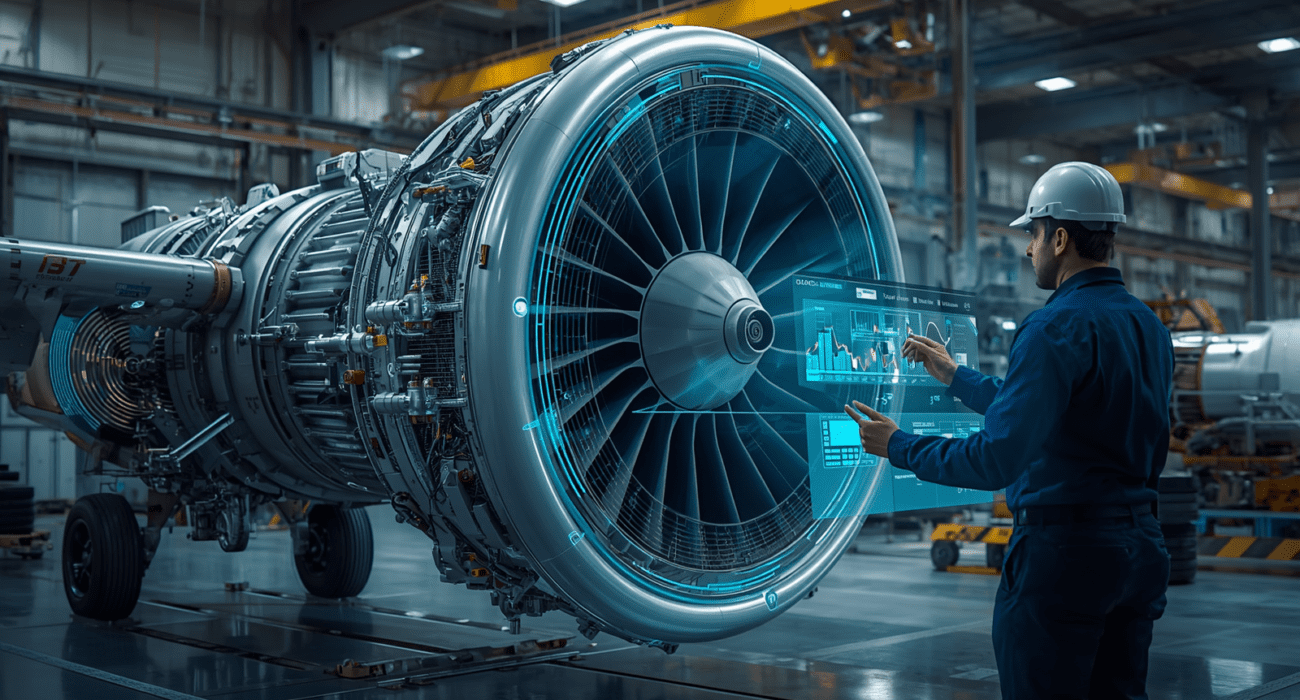
Digital Twins for Businesses: Simulation, Training, and Real-Time Monitoring
Digital twins for businesses are transforming the way organizations train employees, analyze operations, and make strategic decisions.
By combining technologies such as Artificial Intelligence, IoT, simulation systems, and interactive 3D environments, companies can create virtual replicas of physical assets, facilities, products, and operational processes.
These digital representations allow organizations to observe, simulate, and optimize operations before implementing changes in the real world.
As digital transformation continues to accelerate across industries, digital twins are becoming one of the most valuable tools for organizations seeking greater efficiency, improved decision-making, and reduced operational risk.
What Are Digital Twins?
A digital twin is a virtual representation of a physical object, system, process, or environment that continuously evolves using real-world data.
Unlike traditional 3D models, digital twins can connect to sensors, enterprise systems, and operational databases to reflect real-time conditions and performance.
This enables organizations not only to visualize assets but also to analyze behavior, identify potential issues, predict outcomes, and evaluate scenarios before making critical business decisions.
As a result, digital twins have become a key component of Industry 4.0 initiatives and modern digital transformation strategies.
How Do Digital Twins Work for Businesses?
Digital twins combine multiple technologies to create a connection between physical operations and digital environments.
Data Collection
Sensors, IoT devices, and enterprise systems continuously collect operational information from assets, equipment, or facilities.
Digital Model Creation
The collected data is used to build a virtual representation that accurately reflects the behavior and characteristics of the physical environment.
Real-Time Synchronization
The digital model continuously updates as new information becomes available, ensuring an accurate representation of current conditions.
Simulation and Analysis
Organizations can test scenarios, evaluate risks, and analyze potential outcomes before implementing changes in real-world operations.
This process allows businesses to make more informed decisions while reducing uncertainty and operational risk.
Why Are Digital Twins Becoming So Important?
Modern organizations operate in increasingly complex environments.
Leaders are expected to reduce costs, improve efficiency, optimize resources, and accelerate innovation while maintaining operational stability.
Traditionally, testing new ideas often required expensive physical trials, operational interruptions, or significant investments.
Digital twins provide an alternative approach.
Instead of experimenting within real operations, organizations can explore scenarios inside virtual environments where potential outcomes can be analyzed safely and efficiently.
This ability to simulate, predict, and optimize is one of the primary reasons why digital twins are rapidly gaining adoption across multiple industries.
Digital Twins for Businesses and Immersive Training
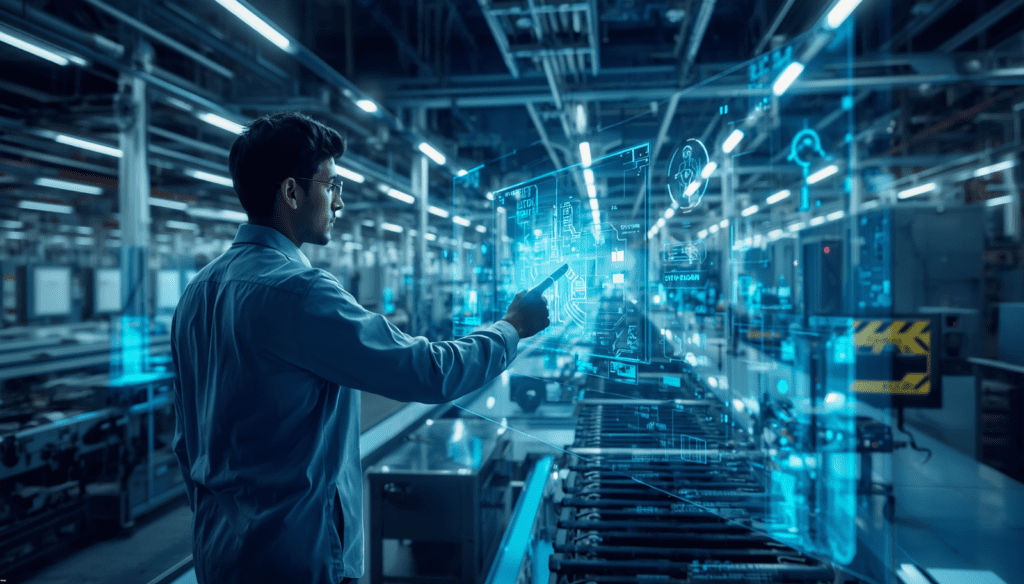
One of the most valuable applications of digital twin technology is employee training and workforce development.
Many organizations must train employees to operate equipment, follow procedures, or respond to complex situations. However, conducting training directly within real operational environments can be expensive, time-consuming, and potentially risky.
With digital twins, businesses can recreate realistic operational scenarios inside virtual environments where employees can safely practice procedures using enterprise simulators.
This approach enables organizations to provide hands-on learning experiences without disrupting operations or exposing personnel to unnecessary risks.
Industries such as manufacturing, construction, energy, mining, logistics, and healthcare are increasingly adopting immersive training environments powered by digital twin technology.
Enterprise Simulation with Digital Twins
Simulation is one of the primary reasons organizations invest in digital twins.
Rather than waiting for issues to occur, businesses can proactively evaluate different scenarios and understand potential outcomes before making operational changes.
Digital twins make it possible to answer questions such as:
- What happens if production demand increases?
- How will a new process affect operational efficiency?
- What are the consequences of equipment failure?
- How can resources be optimized across multiple facilities?
By simulating these situations within a virtual environment, organizations can reduce uncertainty, improve planning, and make better-informed strategic decisions.
Real-Time Monitoring and Operational Optimization
Beyond simulation, digital twins provide organizations with continuous visibility into their operations.
Information collected from connected systems can be displayed through centralized dashboards that provide insight into asset performance, operational efficiency, energy consumption, productivity metrics, and maintenance requirements.
This real-time visibility enables organizations to identify inefficiencies, detect issues early, and continuously optimize operations.
The result is improved reliability, lower operating costs, and greater confidence in decision-making.
Industries Using Digital Twins
Digital twin technology is rapidly expanding across a wide range of industries.
Manufacturing
Manufacturers use digital twins to optimize production lines, monitor equipment performance, and support predictive maintenance initiatives.
Logistics
Logistics companies leverage digital twins to model supply chains, optimize routing strategies, and improve warehouse operations.
Energy
Energy organizations utilize digital twins to monitor critical infrastructure, improve asset performance, and reduce downtime.
Healthcare
Healthcare providers increasingly use digital twins for training, simulation, and advanced medical education.
Construction
Construction firms rely on digital twins to visualize projects, monitor progress, and improve collaboration throughout project lifecycles.
Corporate Learning
Organizations are using digital twins to build immersive training environments that improve knowledge retention and employee engagement.
Digital Twins, Virtual Reality, and Interactive 3D Experiences
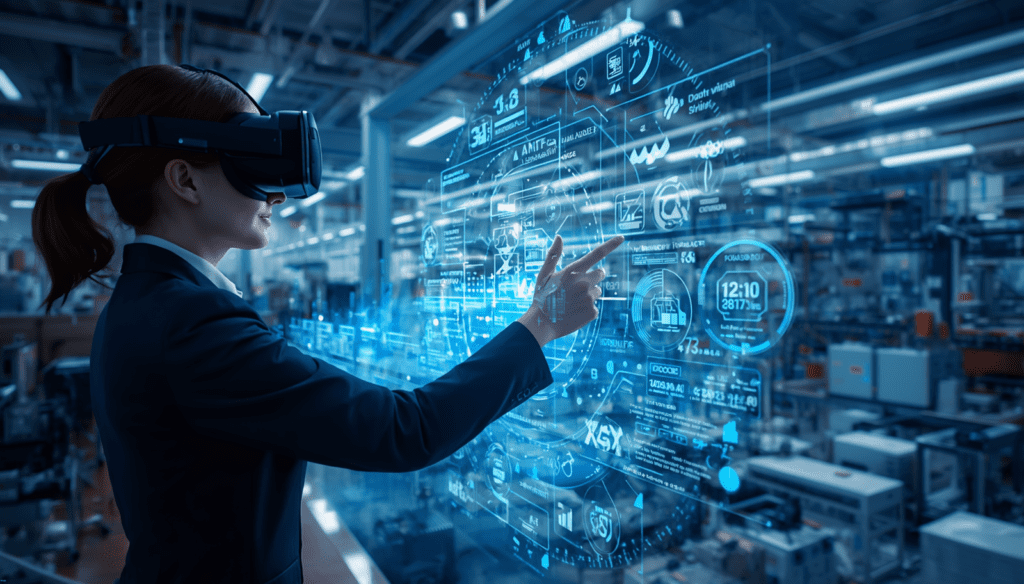
Digital twins often become even more powerful when combined with Virtual Reality for Businesses.
By integrating VR technology with digital twin environments, organizations can explore facilities, interact with equipment, and visualize operational data within fully immersive 3D environments.
These experiences support advanced training, operational planning, facility management, and collaborative decision-making.
The combination of digital twins, enterprise simulators, and Interactive 3D Experiences for Businesses is driving a new generation of enterprise technology solutions designed to improve efficiency, engagement, and innovation.
Benefits of Implementing Digital Twins for Businesses
Reduced Operational Risk
Digital twins allow organizations to test strategies and evaluate scenarios before applying changes in real operations, reducing risk and minimizing costly mistakes.
Better Decision-Making
Access to real-time information and predictive analysis helps organizations make more informed and strategic decisions.
Resource Optimization
Digital twins provide deeper visibility into processes and assets, helping businesses identify inefficiencies and optimize resource allocation.
More Effective Training
Immersive training environments improve employee engagement, accelerate learning, and enhance knowledge retention.
Long-Term Scalability
Digital twin platforms can evolve alongside organizational growth, integrating new technologies and operational requirements over time.
The Future of Digital Twins
The continued advancement of Artificial Intelligence, XR technologies, predictive analytics, and automation will significantly expand the capabilities of digital twins over the coming years.
Organizations will gain the ability to anticipate challenges with greater accuracy, automate complex processes, and create increasingly sophisticated training and simulation environments.
As digital transformation continues to evolve, digital twins will become an essential component of modern enterprise operations.
Fryos Studios: Digital Twin Development for Businesses
At Fryos Studios, we develop enterprise digital twins, simulation platforms, and immersive experiences that help organizations visualize, analyze, and optimize complex operations.
Our team combines 3D technologies, XR development, Artificial Intelligence, simulation systems, and interactive design to build scalable solutions aligned with real business objectives.
Depending on project requirements, these solutions can also be integrated with Enterprise Games and Gamification Platforms to support onboarding, workforce development, and corporate learning initiatives.
Whether the goal is training, simulation, monitoring, or operational optimization, we help organizations transform complex information into meaningful interactive experiences.
Ready to Explore Digital Twin Technology for Your Business?
Discover how digital twins can improve training, simulation, and operational performance across your organization.
Speak with our team and learn how a custom digital twin solution can support your digital transformation strategy.
📩 Contact us today:
Email: info@fryosstudios.com
🌐 Fryos Studios Official Website