
Enterprise Training Simulators: The Future of Corporate Learning
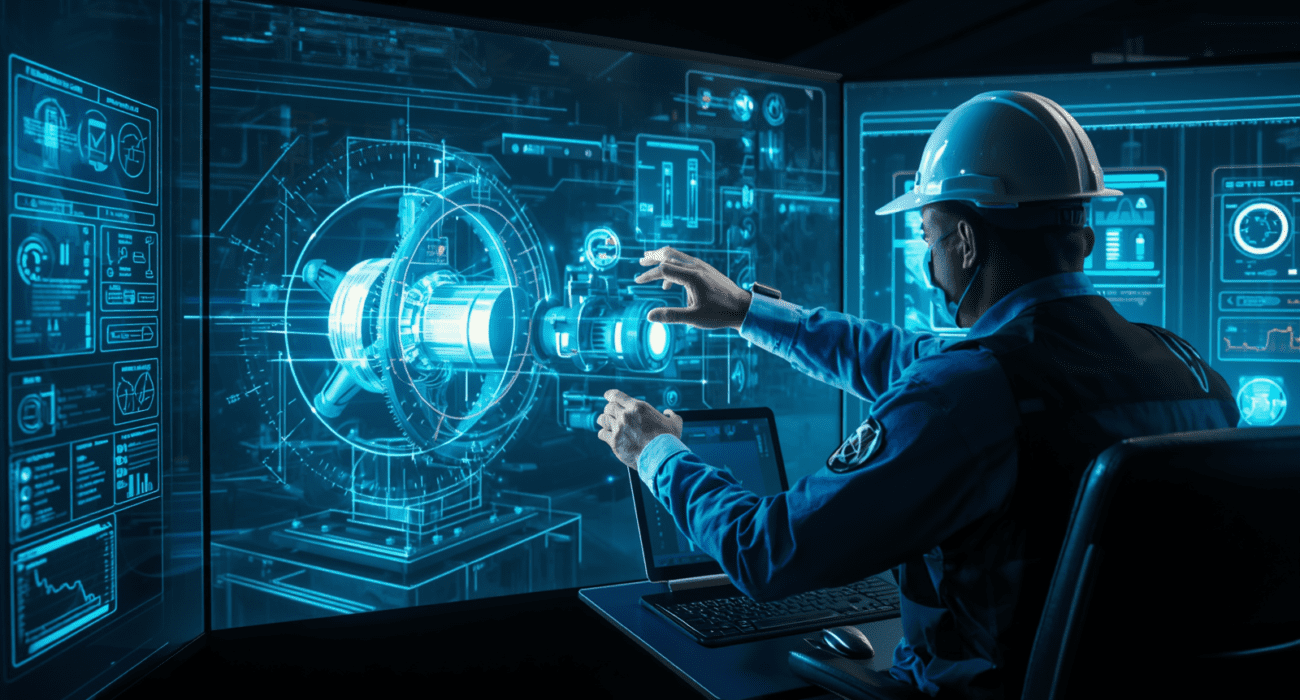
Enterprise training simulators are transforming the way organizations develop skills, train employees, and prepare teams for real-world challenges.
For decades, corporate training has relied heavily on presentations, manuals, classroom sessions, and passive learning methods. While these approaches can deliver information, they often struggle to maintain engagement, measure performance effectively, and ensure long-term knowledge retention.
Today, organizations are looking for more efficient alternatives. Through simulation, immersive technologies, and interactive learning experiences, employees can develop practical skills, make decisions, and gain hands-on experience in realistic environments without exposing operations, equipment, or personnel to unnecessary risks.
As a result, enterprise training simulators are becoming a key component of modern workforce development strategies.
What Are Enterprise Training Simulators?
Enterprise training simulators are digital environments designed to replicate real-world situations for learning and skill development purposes.
Unlike traditional training programs, where participants primarily consume information, simulators allow users to actively engage with scenarios, solve problems, and experience the consequences of their decisions in a controlled environment.
This creates a far more effective learning experience by combining theory with practical application.
Organizations use training simulators to support employee onboarding, operational training, safety procedures, technical education, leadership development, customer service training, and many other business-critical functions.
Why Are Organizations Transforming Their Training Programs?
The way people learn has changed dramatically.
Modern employees are accustomed to digital experiences, interactive content, and technology-driven environments. As a result, traditional training methods are becoming less effective at capturing attention and driving meaningful learning outcomes.
Low Knowledge Retention
People tend to remember what they actively experience far more effectively than what they simply read or hear.
Limited Engagement
Traditional training sessions often struggle to maintain participation and motivation.
Operational Risks
In industries such as manufacturing, healthcare, logistics, construction, and energy, allowing employees to practice directly on real equipment can introduce significant risks.
Limited Performance Visibility
Organizations increasingly require measurable training outcomes and clear performance indicators.
Simulation-based learning addresses these challenges by transforming training into an active, measurable, and highly engaging experience.
How Do Enterprise Simulators Work?
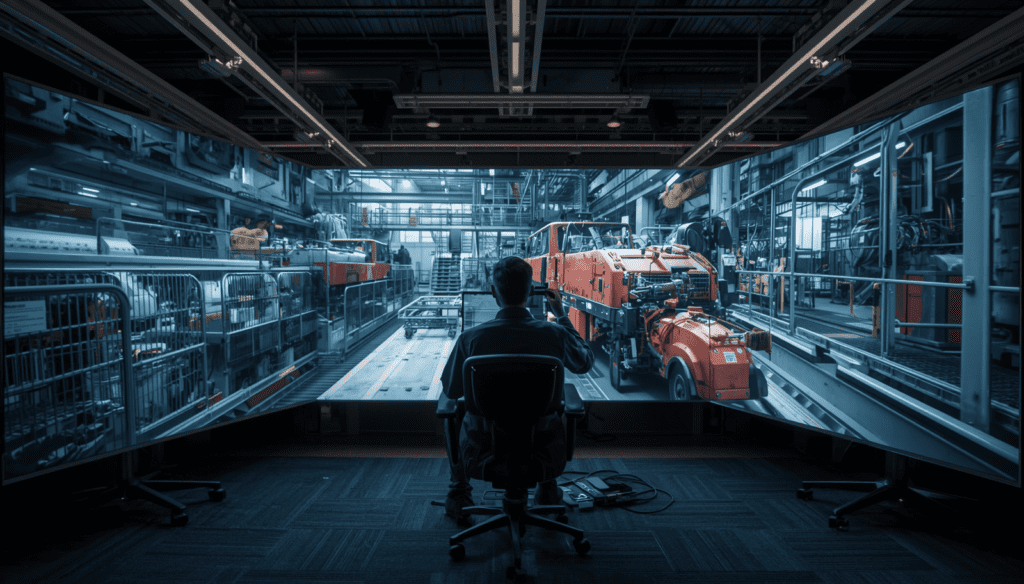
Enterprise simulators recreate operational environments, business processes, and real-world scenarios using advanced digital technologies.
Realistic Scenario Simulation
Users interact with environments that closely mirror real workplace conditions, allowing them to gain practical experience before performing tasks in real-world situations.
Safe Decision-Making
Employees can test strategies, make mistakes, and learn from outcomes without impacting actual operations.
Immediate Feedback
Training systems can provide real-time feedback that reinforces learning and accelerates skill development.
Performance Measurement
Modern simulation platforms track completion rates, decision-making processes, response times, and overall performance metrics.
This enables organizations to evaluate training effectiveness with far greater accuracy.
Technologies Driving Enterprise Training Simulators
The rapid growth of enterprise simulation has been fueled by advances in several emerging technologies.
Virtual Reality
Virtual reality allows employees to fully immerse themselves in highly realistic digital environments.
Many organizations enhance training programs through internal solutions such as Virtual Reality for Companies, creating immersive simulations for operational procedures, safety training, and technical skill development.
Interactive 3D Experiences
Interactive 3D environments allow employees to explore equipment, facilities, and workflows in highly visual and engaging ways.
These solutions are particularly valuable for technical education, product training, and operational learning.
Digital Twins
Digital twins create virtual replicas of assets, systems, and infrastructure that can be used for simulation, analysis, and workforce training.
By combining real-world operational data with simulation, organizations can create more realistic and context-driven learning experiences.
Artificial Intelligence
Artificial Intelligence enables adaptive learning experiences that adjust based on user performance, creating more personalized and effective training journeys.
Benefits of Simulation-Based Training
Interactive experiences help employees retain information more effectively than traditional learning methods.
Reduced Operational Errors
Employees can repeatedly practice procedures before applying them in real-world environments.
Lower Risk Exposure
Training can take place without exposing people, equipment, or infrastructure to unnecessary risks.
Faster Learning Curves
Hands-on experiences accelerate skill acquisition and competency development.
Greater Scalability
Simulation platforms allow organizations to train larger teams without depending entirely on physical facilities or instructor availability.
Data-Driven Assessment
Performance metrics provide valuable insights that support continuous improvement.
Industries Already Using Enterprise Training Simulators
Simulation has become an essential training tool across a wide range of industries.
Manufacturing
Manufacturers use simulators to train operators, improve efficiency, and reduce production errors.
Logistics
Simulation helps prepare employees for equipment operation, safety procedures, and complex workflows.
Healthcare
Hospitals and healthcare providers rely on simulation to train professionals in medical procedures and critical decision-making.
Construction
Construction companies use training simulators to improve safety and operational readiness.
Mining
Mining organizations leverage simulation to develop skills while minimizing exposure to hazardous environments.
Energy
Energy companies use simulation to train technicians and operators in highly complex systems.
Retail
Retail businesses implement simulation to improve customer service, product knowledge, and sales performance.
Traditional Training vs Simulation-Based Learning
| Traditional Training | Simulation-Based Learning |
|---|---|
| Passive learning | Active participation |
| Lower retention | Higher retention |
| Limited measurement | Real-time analytics |
| Restricted practice | Realistic simulations |
| Lower engagement | Higher engagement |
| Limited scalability | Digitally scalable |
Simulation transforms learning from a passive activity into an experiential process where employees develop skills through action.
Artificial Intelligence and the Future of Enterprise Simulation
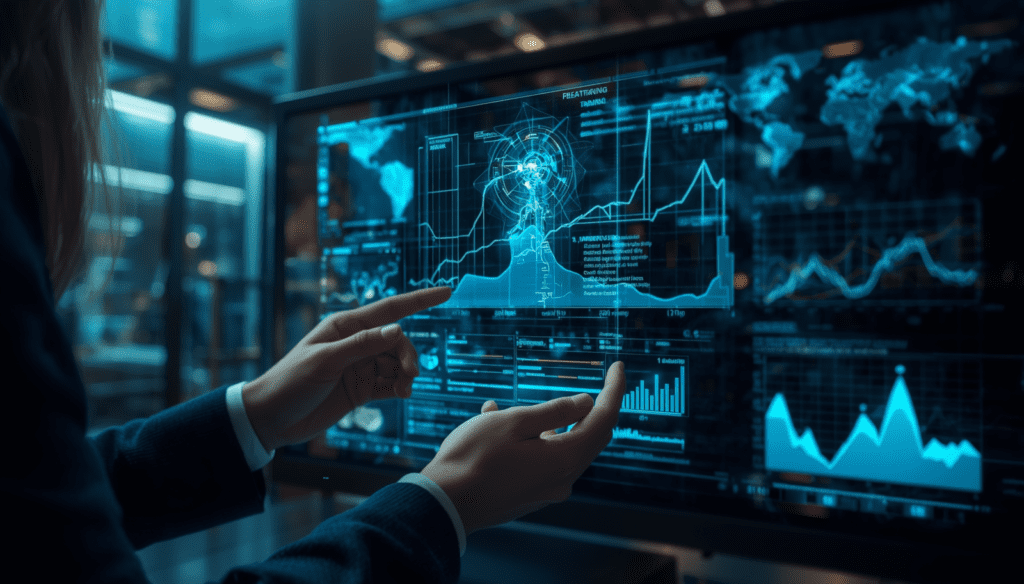
Artificial Intelligence is shaping the next generation of enterprise training platforms.
Modern systems can dynamically adapt training scenarios based on skill level, identify performance gaps, and generate personalized learning recommendations.
AI also enables more realistic simulations, automated assessments, and data-driven workforce development strategies.
The convergence of simulation, analytics, and Artificial Intelligence is redefining the future of corporate learning.
Enterprise Training Simulators and Immersive Technologies
Today’s simulation platforms are part of a broader ecosystem of immersive technologies.
Many organizations now combine:
- Virtual Reality
- Interactive 3D Experiences
- Digital Twins
- Artificial Intelligence
- XR Platforms
- Serious Games
- Gamified Learning Systems
Together, these technologies create highly engaging, measurable, and scalable training experiences that support long-term workforce development.
As digital transformation continues to accelerate, enterprise training simulators are becoming a strategic investment for organizations seeking to improve performance, safety, and operational excellence.
Fryos Studios: Enterprise Training Simulator Development
At Fryos Studios, we develop enterprise simulators, interactive training platforms, and immersive learning experiences designed to help organizations train teams more effectively.
Our team combines technologies such as Unity, Unreal Engine, Virtual Reality, Artificial Intelligence, Interactive 3D Experiences, and advanced simulation systems to transform complex processes into engaging learning environments.
We work with organizations seeking to improve workforce performance, optimize training programs, and accelerate skill development through technology-driven solutions.
Companies investing in simulation today are building a competitive advantage based on knowledge, efficiency, and workforce readiness.
Ready to implement enterprise training simulators in your organization?
Contact us and discover how we can help transform traditional training programs into interactive, measurable, and scalable learning experiences.
Email: info@fryosstudios.com
🌐 Fryos Studios Official Website