
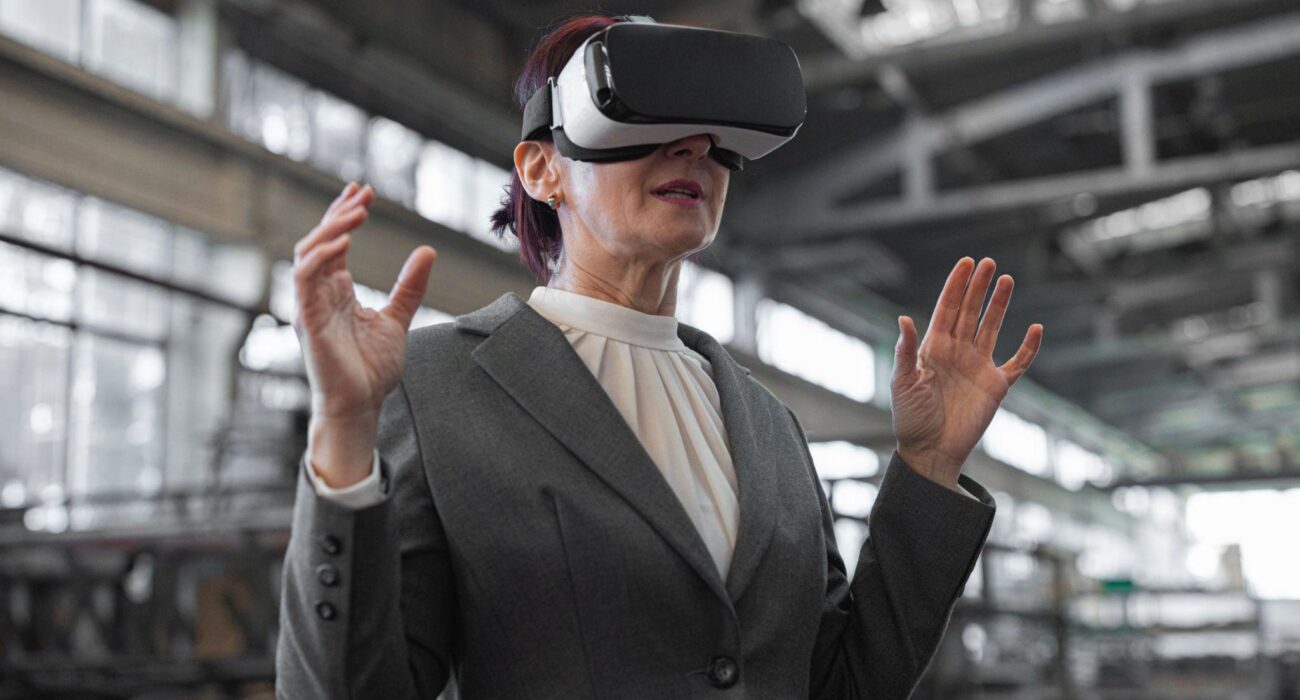
10 Virtual Reality Business Applications Transforming Modern Companies
The uses of virtual reality for businesses are transforming the way organizations train employees, optimize processes, reduce operational risks, and create immersive experiences for customers and teams.
Virtual reality for businesses has become one of the most important technologies for digital transformation across sectors such as manufacturing, healthcare, construction, logistics, and retail. Thanks to the evolution of Unity, Unreal Engine, artificial intelligence, and increasingly accessible VR devices, organizations can implement immersive solutions with measurable and scalable results.
Below, we explore the main uses of virtual reality for businesses and how different industries are leveraging this technology to gain real competitive advantages.
What Is Virtual Reality for Businesses?
Virtual reality for businesses refers to the use of immersive digital environments designed to solve corporate challenges related to training, simulation, sales, collaboration, and digital transformation.
Unlike entertainment-focused applications, business solutions aim to improve performance indicators, reduce errors, and optimize processes.
Many organizations complement these strategies with virtual reality solutions for enterprises, enabling safer training, more interactive experiences, and more effective learning processes.
What uses of virtual reality for businesses generate the most value?
The uses of virtual reality for businesses are increasingly broad. Today, organizations use this technology to train teams, improve workplace safety, present products, optimize industrial processes, and accelerate innovation.
Depending on the industry and business objectives, these applications can generate significant cost reductions, higher knowledge retention, and measurable productivity improvements.
1. Immersive corporate training
One of the most widespread uses of virtual reality for businesses is employee training.
Traditional methods often rely on manuals, presentations, or in-person sessions that result in low knowledge retention. Virtual reality completely changes this dynamic by allowing users to learn through direct experience.
Instead of observing a procedure, employees can perform it inside an interactive simulation where every decision has consequences and learning happens through practice.
This methodology significantly improves information retention, reduces operational errors, and accelerates training processes.
Many organizations are using immersive training programs to prepare operational staff, sales teams, and business leaders far more effectively than traditional methods. This is one of the fastest-growing uses of virtual reality for businesses due to its direct impact on productivity and learning retention.
If you want to go deeper into this topic, you can check our guide on virtual reality for businesses, where we explain how to implement immersive solutions in corporate environments.
2. Industrial and operational simulators
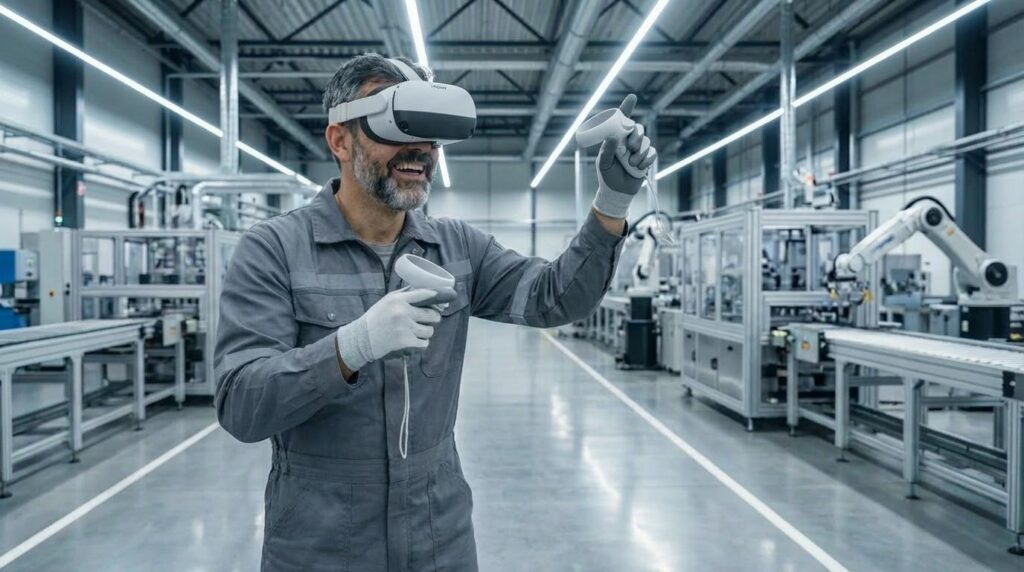
In sectors where mistakes can lead to major financial losses or safety risks, virtual reality simulators have become essential tools.
Companies can recreate machinery, production lines, industrial equipment, or technical procedures inside highly realistic virtual environments.
This allows workers to practice a task dozens of times before facing the real-world environment.
Industries such as manufacturing, mining, energy, and logistics use simulators to train operators, improve internal protocols, and reduce operational risks.
In addition to lowering costs associated with in-person training, simulators enable standardized learning and objective performance measurement.
3. Workplace safety training
Workplace safety is one of the biggest challenges for organizations operating in high-risk environments.
Virtual reality allows companies to recreate complex situations that would be difficult or dangerous to simulate in real life.
For example, an organization can train employees to respond to fires, evacuations, chemical spills, or operational failures without putting anyone at risk.
These immersive experiences help workers develop procedural memory, improve reaction time, and better understand safety protocols.
As a result, organizations reduce incidents and strengthen their preventive safety culture.
4. Medical training and clinical simulations
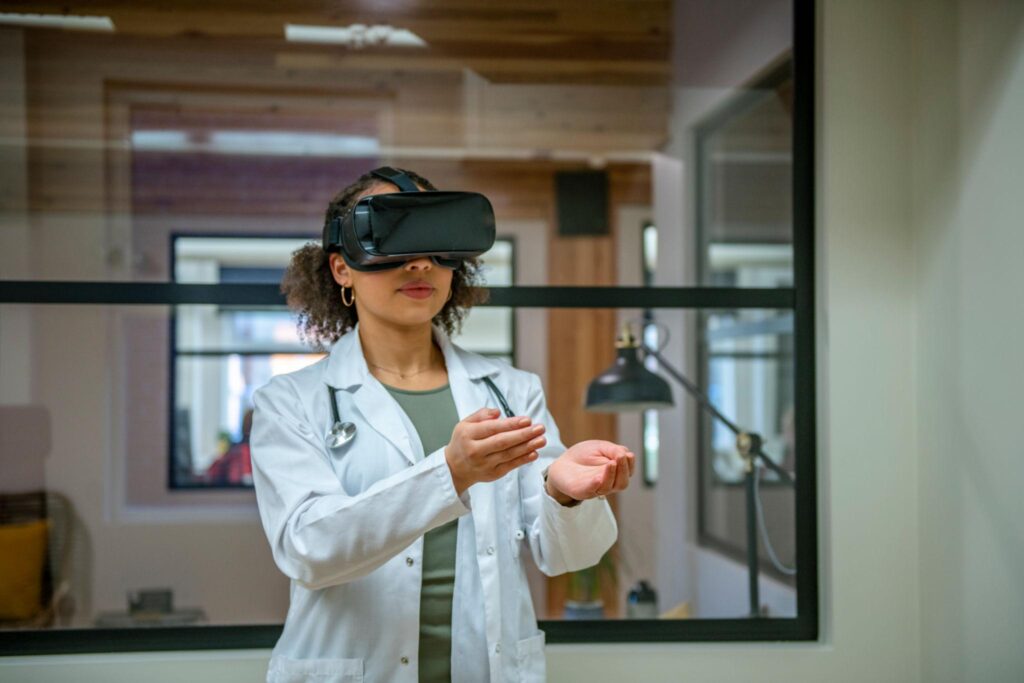
The healthcare sector has been one of the main drivers of virtual reality in education.
Universities, hospitals, and medical centers use immersive simulations to train professionals in complex procedures that require precision and hands-on experience.
The ability to repeat a virtual surgery multiple times helps develop skills without compromising patient safety.
In addition, these platforms enable objective performance evaluation and help identify areas for improvement before professionals work in real scenarios.
The combination of simulation, analytics, and immersive environments is transforming modern medical education.
5. Employee onboarding
Onboarding new employees is often a costly and slow process for many organizations.
Virtual reality allows companies to speed up this process through immersive tours, task simulations, and interactive experiences that help employees quickly understand company culture and internal procedures.
A new employee can explore facilities, learn protocols, and become familiar with tools from day one.
This reduces the learning curve, improves onboarding experience, and enables employees to start contributing value sooner.
6. Interactive virtual showrooms
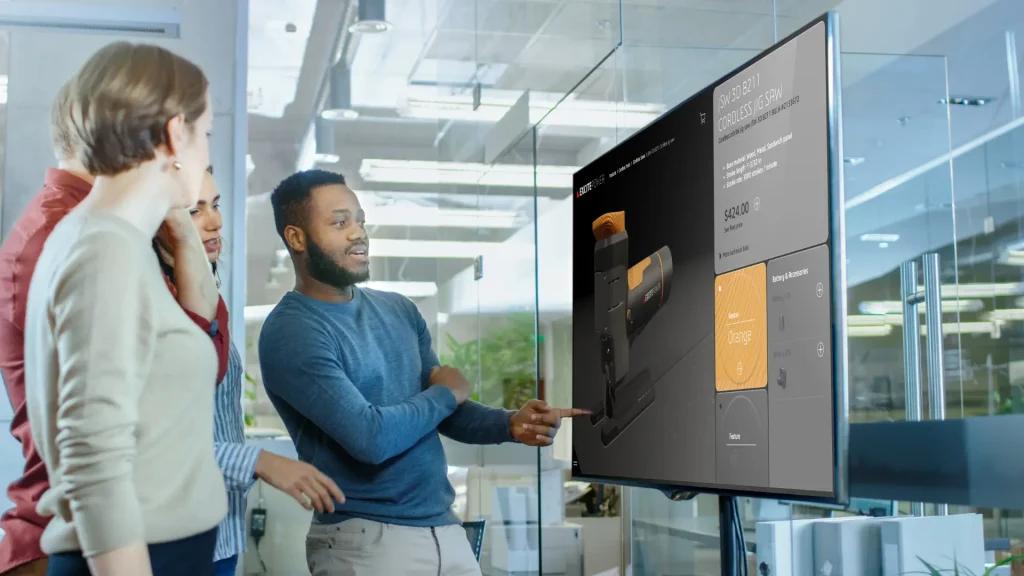
Companies are also using virtual reality to transform how they present products and services.
Virtual showrooms allow potential customers to explore entire catalogs inside immersive 3D environments, regardless of geographic location.
This type of experience is especially useful for companies selling complex products, specialized machinery, or high-value solutions.
Users can visualize details, interact with digital models, and better understand product features before making a purchase decision.
Many organizations complement these strategies with 3D experiences for businesses, creating digital ecosystems that enhance customer experience and increase conversions.
7. Complex product presentations
There are products that simply cannot be properly explained through photos or conventional videos.
Virtual reality makes it possible to showcase industrial machinery, infrastructure, technological processes, and prototypes inside interactive environments where users can explore every component in detail.
This capability is especially valuable for engineering, construction, manufacturing, and technology companies.
By better understanding the product, customers reduce uncertainty and make more informed decisions.
8. Corporate events and brand activations
There are products that simply cannot be properly explained through photos or conventional videos.
Virtual reality makes it possible to showcase industrial machinery, infrastructure, technological processes, and prototypes inside interactive environments where users can explore every component in detail.
This capability is especially valuable for engineering, construction, manufacturing, and technology companies.
By better understanding the product, customers reduce uncertainty and make more informed decisions.
9. Digital twins and advanced visualization
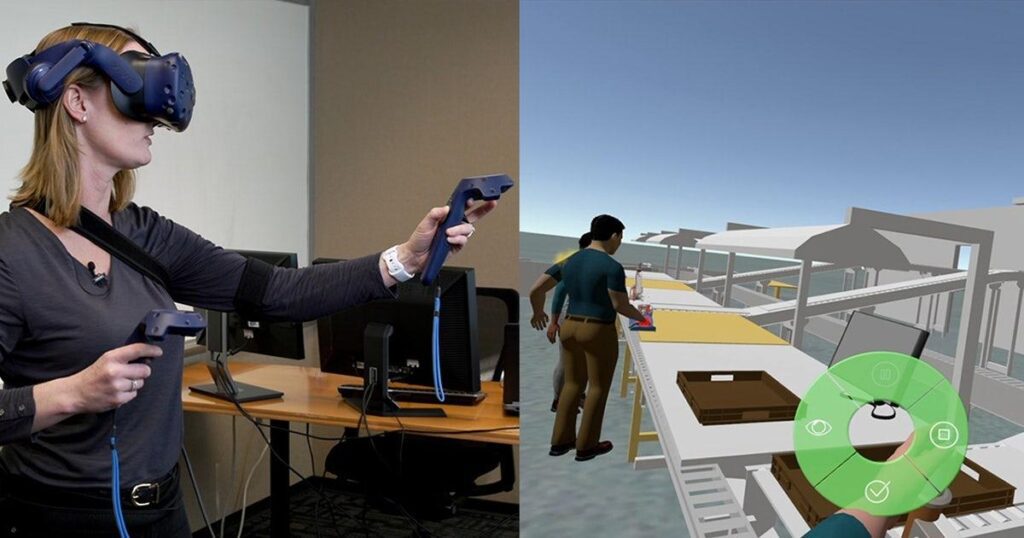
Digital twins are revolutionizing how organizations manage assets, processes, and infrastructure.
A digital twin is a virtual representation of a physical object, system, or process that can be used to monitor, analyze, and optimize operations.
When combined with virtual reality, users can explore these digital replicas immersively and better understand the behavior of complex systems.
This technology is gaining relevance in industrial, logistics, and infrastructure sectors where operational optimization has a major impact on profitability.
Among the new uses of virtual reality for businesses, digital twins have become one of the most promising technologies for industrial process optimization.
10. Business games and corporate gamification
Corporate gamification represents one of the most innovative applications of virtual reality.
By integrating game mechanics into business processes, organizations can increase user participation, engagement, and motivation.
Business games can be used for training, onboarding, competency evaluation, and team building.
Unlike traditional methods, these experiences turn learning into an active and highly participatory activity.
Many organizations also implement business games to improve knowledge retention and generate more accurate performance metrics.
Why are more companies investing in virtual reality?
The uses of virtual reality for businesses continue to expand due to the tangible benefits compared to traditional methods.
Organizations can train teams in safe environments, reduce costs associated with travel and physical equipment, improve learning retention, and obtain precise performance metrics.
In addition, the evolution of hardware and specialized software has significantly lowered entry barriers, allowing medium and large companies to implement immersive solutions with increasingly attractive ROI.
The future of business virtual reality
The evolution of virtual reality will continue accelerating in the coming years thanks to integration with technologies such as artificial intelligence, digital twins, XR platforms, and real-time collaborative systems.
Companies that adopt these technologies early will have greater opportunities to optimize processes, improve training, and differentiate themselves in increasingly competitive markets.
The uses of virtual reality for businesses will continue expanding as organizations look for new ways to train teams, optimize operations, and create more innovative experiences for customers and employees.
From corporate simulators to virtual showrooms and immersive training platforms, virtual reality is transforming how companies learn, sell, and make decisions.
What feels innovative today will soon become a standard across multiple industries. Everything indicates that the uses of virtual reality for businesses will keep growing thanks to integration with artificial intelligence, digital twins, and advanced XR experiences.
Conclusion
Virtual reality for businesses is no longer an experimental technology. Today, it is helping organizations across multiple industries improve training, reduce risks, optimize operations, and create more immersive experiences for employees and customers.
The uses of virtual reality for businesses range from industrial simulators and safety training to virtual showrooms and immersive learning platforms. As these technologies continue to evolve, companies that adopt immersive solutions will be better prepared to face the challenges of digital transformation.
Fryos Studios: Development of virtual reality experiences for businesses
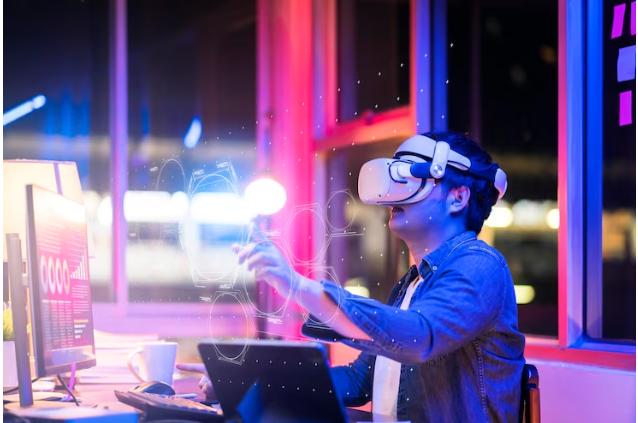
In Fryos Studios we develop virtual reality solutions for businesses using Unity, Unreal Engine, and advanced immersive technologies.
We create corporate simulators, training platforms, interactive experiences, and custom projects designed to solve real business challenges.
Our approach combines technology, strategy, and interactive design to help organizations in Colombia and Latin America leverage the potential of virtual reality within their digital transformation processes.
Want to implement virtual reality in your company?
Talk to a Fryos Studios specialist and discover how immersive experiences can help train employees, optimize processes, and create real competitive advantages.