
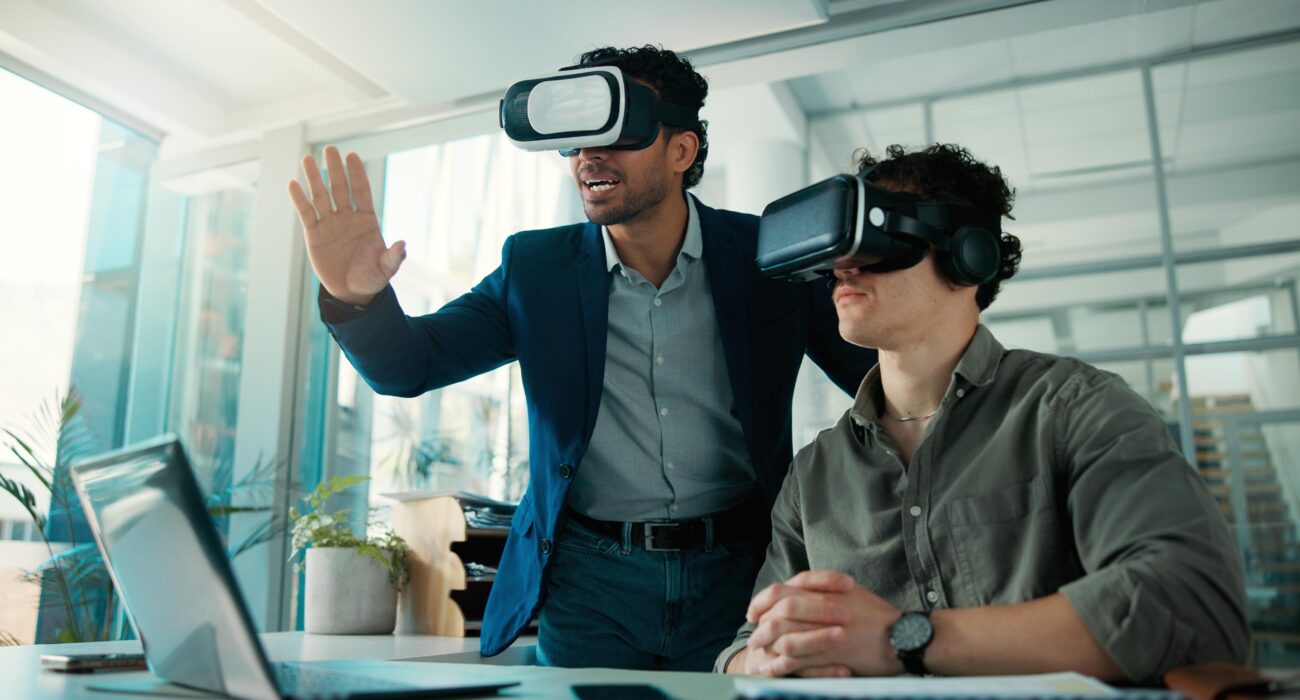
Enterprise Simulators with XR and AI: The Future of Corporate Training
Enterprise simulators are transforming how organizations train employees, reduce operational risks, and develop critical skills. As companies look for more effective and scalable training methods, technologies such as Extended Reality (XR), Artificial Intelligence (AI), and interactive simulation platforms are enabling learning experiences that far surpass traditional approaches.
What makes this evolution particularly interesting is that many of these technologies originated in the video game industry. Game engines, multiplayer networking systems, real-time simulations, and interactive digital environments originally built for entertainment are now powering a new generation of enterprise training solutions.
For organizations seeking to accelerate knowledge transfer, improve workplace safety, and optimize training resources, enterprise simulators have become a powerful alternative to conventional learning methods.
The Challenge
Corporate training is becoming increasingly complex.
Organizations need to train larger teams, maintain consistent standards across locations, and shorten learning curves without significantly increasing operational costs.
At the same time, industries such as healthcare, manufacturing, construction, logistics, energy, and technology require employees to master complex procedures where mistakes can lead to costly consequences.
Traditional training methods often depend on physical facilities, instructor availability, and limited hands-on opportunities. These constraints make it difficult to scale learning programs efficiently while ensuring consistent outcomes.
Ultimately, companies face a common challenge: employees need practical experience, but gaining that experience in real-world environments can be expensive, risky, and difficult to standardize.
These limitations explain why more organizations are exploring immersive technologies capable of delivering safer, more scalable, and more effective learning experiences. The need to train teams in controlled environments has accelerated the adoption of simulation, XR, and AI-powered solutions across multiple industries.
The Solution
Enterprise simulators allow organizations to recreate real-world scenarios within digital environments where employees can learn, practice, and make mistakes safely.
Using XR technologies, companies can build immersive training experiences that replicate real operational procedures, equipment, and workplace conditions. Learners gain hands-on experience without exposing personnel, infrastructure, or machinery to unnecessary risks.
Artificial Intelligence further expands these capabilities by enabling adaptive learning paths, personalized feedback, and dynamic scenarios that evolve based on user performance.
As a result, training becomes significantly more engaging, measurable, and effective than traditional approaches.
Many organizations complement these solutions with internal links to services such as Virtual Reality for Companies and interactive 3D experiences, creating comprehensive digital ecosystems for employee development and operational excellence.
This type of immersive experience allows users to practice procedures, respond to complex situations, and build confidence within controlled virtual environments. By combining simulation, real-time interaction, and performance analytics, enterprise simulators are becoming one of the most valuable tools in modern workforce development.
Platforms and Devices
The rapid growth of enterprise simulators has been driven by technologies originally developed for the gaming industry.
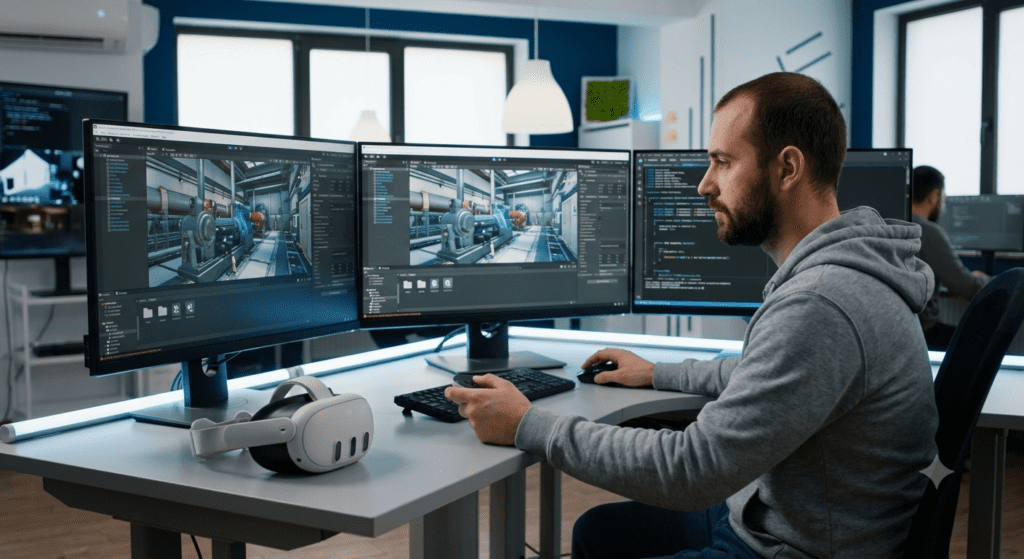
Game engines such as Unity enable the creation of highly realistic interactive environments that can run across desktop computers, mobile devices, web platforms, and XR hardware including Meta Quest and Apple Vision Pro.
This flexibility allows organizations to deploy training solutions that match their operational requirements, budgets, and technical infrastructure.
Many companies are also integrating Interactive 3D Experiences for Businesses into training, sales, onboarding, and product demonstration processes. The combination of simulation, visualization, and immersive technology is accelerating digital transformation across industries.
The Role of Artificial Intelligence in Enterprise Simulators
Artificial Intelligence is fundamentally changing how enterprise simulators operate.
Traditional simulations often follow predefined paths and scripted interactions. AI-powered environments, however, can respond dynamically to user decisions, generate realistic challenges, and provide personalized recommendations for improvement.
Virtual assistants and AI-driven agents also enable natural language interaction, making simulations feel more realistic and intuitive.
This transforms every training session into a personalized learning experience tailored to individual skill levels and performance objectives.
As AI technologies continue to evolve, the boundaries between gaming, simulation, and enterprise learning are becoming increasingly interconnected.
Networking and Collaborative Experiences
One of the most important advancements in immersive training comes from multiplayer networking technologies that have been used for decades within the gaming industry.
Modern networking platforms allow multiple participants to connect inside the same virtual environment, enabling collaborative training, remote supervision, and distributed learning experiences.
Solutions such as Photon have helped accelerate the development of real-time collaborative XR applications, immersive simulations, and enterprise learning platforms.
A strong example is the Fundamental XR case study, where networking infrastructure enables instructors and learners to collaborate inside immersive simulations where real-time interaction plays a critical role in skill development.
This example demonstrates how technologies originally designed for multiplayer gaming can generate meaningful impact in highly specialized industries by improving scalability, collaboration, and training effectiveness.
To build these advanced experiences, many organizations also rely on Gaming Staff Augmentation models, bringing together specialized teams with expertise in XR development, networking architecture, simulation systems, and immersive technologies.
What We Can Learn from the Fundamental XR Case
The Fundamental XR case demonstrates the immense potential of enterprise simulators when XR, Artificial Intelligence, and real-time networking technologies are combined.
Its platform enables healthcare professionals to practice complex procedures inside immersive environments that are scalable, measurable, and safe.
Beyond healthcare, the same principles can be applied across virtually any industry where practical skill development is essential.
The key takeaway is clear: the technologies driving innovation in gaming are also redefining how organizations transfer knowledge, develop expertise, and prepare employees for real-world challenges.
About Fryos Studios
At Fryos Studios, we develop enterprise simulators, XR experiences, and interactive solutions that combine gaming technologies with real business objectives.
Our team leverages tools such as Unity, Artificial Intelligence, multiplayer networking systems, and immersive technologies to build training platforms, advanced simulations, and corporate gaming solutions designed to improve learning outcomes, engagement, and operational performance.
In addition to simulation platforms, we create Virtual Reality for Companies solutions, interactive 3D experiences, serious games, and custom immersive applications that help organizations accelerate digital transformation through innovation.
For projects that require specialized expertise or rapid scaling, we also provide Gaming Staff Augmentation services, enabling businesses to accelerate the development of XR applications, simulations, and complex interactive experiences.
Our mission is to help organizations harness the power of gaming technology to solve real-world business challenges.
Conclusion
Enterprise simulators are evolving rapidly thanks to the convergence of XR, Artificial Intelligence, and real-time networking technologies.
What was once exclusive to the gaming industry now enables organizations to create safer, more scalable, and more effective training experiences across multiple sectors.
Cases such as Fundamental XR demonstrate how immersive technologies can transform workforce development through simulation, analytics, collaboration, and adaptive learning.
As businesses continue to pursue innovation, operational efficiency, and workforce readiness, enterprise simulators are becoming a strategic investment for the future of corporate training.
Ready to Build Your Own Enterprise Simulator?
Whether you need an immersive training platform, an XR-based simulation, a collaborative learning environment, or a custom enterprise gaming solution, Fryos Studios can help bring your vision to life.
Our team combines expertise in game development, XR technologies, Artificial Intelligence, and interactive design to create scalable solutions tailored to your organization’s goals.
If you’re exploring new ways to train employees, reduce operational risks, or improve knowledge retention, let’s discuss how a custom enterprise simulator can support your business objectives.
🚀 Contact Fryos Studios and start building the next generation of corporate training experiences.